Thursday, December 26, 2019

Karl Germain The Wizard


Today I get to talk about one of my favorite magicians of all time. I became fascinated with this gentlemen when I first saw one of his breathtaking posters (see above). It was hanging in the American Museum of Magic years ago and I was awe struck. The poster was tall, a 3 sheet poster, with an image of a witch and black cat leaning over a fire. The smoke from the fire revealed an image of Germain who himself, was conjuring a spirit. And across the top of the poster the words, GERMAIN The Wizard. I read what little I could find on Germain in books, and then learned there were two biographies written on Germain, but a the time they were long out of print. When I finally was able to get a copy of them, I read them cover to cover. Germain truly seemed like a real wizard. I think you too will become fascinated by Germain just as I did, after reading this article. 

Our subject was born Charles Mattmueller on Feb 12, 1878 in Cleveland Ohio. Technically he should be Charles Mattmueller Jr. as his father was  also Charles Mattmueller. David Price’s book, MAGIC A Pictorial History of Conjurers in the Theatre, explains The name Karl came about during his school years when several other boys in his class also had the name Charles. The teacher decided this Charles would be called Karl. It must have pleased young Karl Mattmueller because he kept the name. 

He became interested in magic in his youth, but I’m not sure what the specific event was that peaked his curiosity. I have a feeling that his interest in magic came directly from his father, who had seen magicians in his native Germany and often told young Karl about the feats he had witnessed. Also, I know young Karl had a copy of Modern Magic by Professor Hoffmann which was given to him by his father when he was 14. At age 15, in 1893, he sketched out a design for a possible poster inside his copy of Modern Magic, on a blank page no doubt. His name in the design  is listed as Chas. Mattmueller. The following year he would create another sketch for a potential advertising piece but this time his name was listed as Karl Mattmueller-Magician. 

Young Karl’s early magic career, in fact, his entire magic career, would be a family affair. Census records from the time list his father as being a machinist and also working in the picture framing business. He was clearly a skilled craftsman. Karl’s father would make many of the props that Karl would use in his show. Another family member would be a regular part of Karl’s show and that was his sister Ida. She would act as assistant and would participate in his mind reading experiments. More on both of them later.

He would have several stage names before settling upon the best one. First he was Charles Mattmueller, then 
Karl Mattmueller, then for a time he went by the stage name Alexander, but upon being selected to perform for the Central Lyceum Bureau in 1899, he chose the name Germaine. Actually the chose the name GERMAIN without the ‘e’, but due to an error by a printing company, he became Germain with an e at the end. They didn’t have spellcheck back then sadly. 

Now before I can get into his magic, I must point out something that I read in several different articles and books on Germain. When describing his act, many people use the word ‘artistic.’ The first time I read it was in David Price’s book, and then I also saw it in The Annals of Conjuring book. In several magazine articles on Germain, they also use the word ‘artistic’ to describe him. On the surface it might seem that these various magic authors are simply being lazy and copying each other, which happens a lot in magic literature. But having looked over the material in Germain’s show, and seen photos of the incredible props, plus having seen a number of them in person, I can attest to the fact that ARTISTIC is probably the perfect word to describe Karl Germaine.

Beyond the look of his props, why do so many say Germain was artistic. I truly believe it was because he was highly creative, presented many of his own original creations. When he did regular magic routines, he always added something to the routine to make them unique to him. His patter was different from the standard performer of the time. Of course, he dressed immaculately, as did his on stage assistants. And this appears to be the case from the very start of his career right up to the end.

Germain’s bread and butter seems to be the Lyceum and Chautauqua circuits. As mentioned he began in 1899 and continued for several years. In the book, Germain the Wizard and His Legerdermain by Stuart Cramer, he shares the story of an event that took place in July of that year. The Germain company was onboard a train heading for their next destination. They were part of a larger troupe of performers. Germain was there with his sister Ida. Unknown to the passengers, a cargo train off in the distance was on the same track as the passenger train. No one knew, and the sudden realization did not prevent a disaster from happening. The two trains collided, sending various cars crashing, and some tipping off the tracks. The passenger car that Germain and his fellow performers were on, was further down the line but still suffered from the impact. The result was that their car came to an abrupt stop and tilted at an angle off the tracks. No one was hurt, though everyone was very shaken up. 

After helping other passengers out of the wrecked cars, Germain realized it would be impossible for him to make his show unless he made other arrangements. I’m not even sure how they pulled this off but they were able to get a buggy to take them and their luggage and equipment to another train and booked passage just in time to make it to their destination. They also made it in time to do give their performance!

Another story from the Germain The Wizard and His Legerdermain book, tells of Germain’s appearance at the Opera House in Wheeling WV. The company was unaware that the entire area had flooded, but the organizers met Germain at station with a raft to bring them to the theatre to do the show! Unreal. 

If you’re wondering what kind of magic Germain did, well, he was capable of doing most anything. He had primarily stage or platform style tricks, but he kept a number of very deceptive close-up tricks on him at all times. He also excelled at mentalism, which included his sister Ida. And one of the bigger surprises for me was to discover that Germain also presented illusion magic, as in Grand Illusion. At this time period, Grand Illusion was really in it’s infancy, but there were some truly marvelous creations that came out of this period. One early illusion was called The Mystery of Malabar. The thinking behind this routine was brilliant. The effect was a two sided platform which was set up in front of the audience. A top went onto this two sided platform and then a basket similar in style to that of the famed hindu basket effect was placed on top of this platform. You could see above, below, and to the sides of this platform. Next, Germain put on a robe and mask or beard and climbed into the basket. Only seconds later, walking down the aisle in the audience was Karl Germain. He vanished from the basket and in impossible time, appeared at the back of the theatre! He wouldn’t be the first or last to present this type of effect, but his method was quite clever. 

Each year Germain added new an amazing mysteries to his show. Let’s take a moment to examine some of his other unique effects…

The Block. This is an incredible effect with a crazy method but completely original. From the perspective of the audience, this is what they see. There is a block of wood, probably about 12 inches long and maybe 2.5 inches square. This is handed out for examination. In addition is a wooden board, 16 inches long, twelve inches wide, and a quarter inch thick, which is also given out for inspection. Germain then took the block and held it against the board and mysteriously it passed right through. He then pulled it back out, and placed the block at another position on the board at a different angle and once again, the block passed through the board. He repeated it a third time. To the audience it appeared he could push the block through the examined board at any spot and it would pass through, like a knife going through butter.  The image of Germain passing the block through the board is just crazy. In it’s most basic form, this is a penetration effect, and there are many of them in magic. What makes this one so diabolical is the fact that the items are handed out beforehand. Also their appearance is quite organic, meaning they don’t look like magic props but rather normal pieces of scrap wood. They also don’t appear to leave a hole in the board once the block is  passed through. Keep in mind, I do not reveal methods on this podcast, but trust me the method is wild. In the book, CONJURING by Jim Steinmeyer, he has two effects of his own creation that are inspired by Germain’s Block trick, if you are interested.

Another incredible Germain effect is his Butterfly. Again, this was one of the early Germain photos that totally had me intrigued. Keep in mind, this is totally original. Here is the effect: Germain would tell the audience he was about to produce a somethingness out of nothingness. And then he reached up and produced a 14 inch silk. He continued to do this again, and again until he had a dozen or so of varying colors. All of this was done to patter. The dozen silk scarves were then rolled into a sort of ‘cocoon’ and suddenly the bundle of fabric sprung open to reveal a very large butterfly with fluttering wings. I don’t know the actual size of the butterfly but in images it looks to be approximately 3 feet wide. Very large. Once it was produced it was handed off to an assistant who carried it away. Sadly, it almost seems that the better approach would have been to have it float or fly away on it’s own!

Flowers have figured prominently in the acts of many magicians. The Kellar Flower Growth is a wonderful routine where two planters of dirt, eventually sprout two large bushes of flowers. Kellars routine used several tables and two large metal cones which were first showed empty. I have mentioned this in previous podcasts, there is a video of Nickolas Night presenting the Kellar Flower Growth on Youtube, it’s a must see! Oh, and the technique that is used in this video is an improvement suggested by none other than Karl Germain!

Germain’s personal favorite routine was his own Flower Growth. This was the creation of Karl and his father. You see, according to the book Germain the Wizard by Stuart Cramer, Karl’s father had seen a magician in Germany do a similar trick and it always stuck in his brain. So now father and son went about creating a version of their own. In fact, Germain would create several different flower productions before working on the actual Flower Growth idea.   It went through various renditions until the final version, the ultimate one was finally realized. This is how it appeared to the audience. On stage sits a gold Louis the 14th Style side table. It is away from the curtain, and has a clear view above and below the table. On a second table sits an empty flower pot. Germain shows the empty flower pot and proceeds to fill it with dirt. He carries the now full flower pot to the other table and picks up a fan that was resting on the table. Without any covering, no tubes, no curtains, Germain simply waves the fan in the direction of the flower pot. Almost immediately a small tiny green sprout is seen. Germain then continues to wave the fan and move or dance around the table. Gradually, the tiny sprout blooms and gets larger. As Germain continues his fan dance, the plant grows higher and higher until the audience sees large roses on the table. The plant grows to a height of several feet. Germain then takes a pair of shears and cuts off some roses at their stems and passes them out the members of the audience, thus proving he has just made a LIVE rosebush grow right before their very eyes.  

I have been very fortunate to see the Germain Flower Growth prop LIVE in person. It resides in the collection of Ken Klosterman. It is a thing of beauty. The elder Mattmueller hand made this table, with ornate carvings on angels on each leg of the table. The method is diabolical, there was nothing like it when it came out. Many have said it was superior to Kellar’s Flower Growth, at least, that is what I’ve read in a couple books. I swear I saw a video of it being presented online, but now I can’t seem to locate it anywhere. There are three Germain Flower Growths that exist, one , as I mentioned is in Ken Klosterman’s collection, another other is in the collection of David Copperfield, and a third earlier version is in the collection of TELLER.

There is another effect of Germain's that is purely his, and that is his Egyptian Water Bowl Mystery. I recently wrote about it on this blog, so here is a link to that article.


Earlier I mentioned Ida Mattmuellar. This was Karl’s younger sister. She was born in 1880 and thus was 2 years younger than Karl. She provided the music in the show by playing the piano, and served as an assistant to Karl since his earliest days as a magician. In his first tour in 1899, she is listed on the brochure, along with her photogragh, as Ida Germain. She is also singled out as helping him in his ‘Telepathy’ Act. She continued in this role until Karl was offered the chance to perform in England. 

In June 1906, Germain set sail for England. He arrived 7 days later, after an awful sea voyage which left him sea-sick the entire time. But he recovered quick enough and was soon performing. He would tour all over England and Ireland. Eventually he ended up in London where he appeared at the New Bedford Palace Theatre. Germain was very popular in London, as was magic in general. Many of the greats of that era where in town the same time as Germain, folks like Chung Ling Too, Houdini, Lafayette and more. 
In 1907, Houdini and Karl Germain were both in England. Germain, happened to run into Houdini at a banquet and decided he wanted to amaze his friend. He then proceeded to present his favorite pocket trick, the term that was used then for close-up magic. The trick was called The Spirit Writing On Cigarette Paper.  The effect was a blank piece of paper was pinned to the end of a pencil. The spectator (HOUDINI) was asked to name someone, and the signature of that person appeared on the previously blank paper. Houdini watched like a hawk, but in the end was amazed by the presentation.

The highlight of his time abroad was working at St. George’s Hall for Maskeylne and Devant. He was there for a quite a long run. By December 1907, he was back home in Cleveland…..after another LONG sea-sick filled ocean voyage.


On Feb 26th, 1908, Germain’s friend Edward Maro passed away from Typhoid Fever. You can learn all about Maro by listening to podcast ep#11. Maro’s real name was Walter Truman Best, and his wife Allie was abruptly left a widow. Germain did not find out about the death until after Best had been buried.

Allie Best asked Germain for help in dispersing her husbands show props. Germain agreed and headed north to Maronook, on the shores of Lake Lelanau, in Michigan. While going through the various props. Germain naturally got first dibs on things he wanted. He came away with Maro’s Meteroic Ribbon effect, and he came away with a very famous piece that had once belonged to Charles Bertram. And he almost came away with Allie Best! Apparently, that relationship did not last. But let me backtrack to the Charles Bertram item. This was Bertram’s Spirit Lock, that no one knows how it ended up with Maro, but here it was in Maro’s collection. Germain apparently tried to purchase it while he was in England a few years before but was unable. And now it was his. And as he always did, he made it his by creating a unique routine. He told the story of Dr. Faust who was in prison, this lock held the prison door shut. He held up a picture of a lock and then held his fingers as if they were a key. A shadow was cast on the picture of his fingers and as the shadow entered the lock, he turned his hand and the real lock sprang open. 

Thanks to an article in the Dec 2005 issue of MAGIC magazine by Tim Moore, he said no one knew what Bertrams routine was, nor did they know what Maro’s routine was.  So here was Germain, making this clever trick his own by creating a mystical and memorable story. 

Curiously at the conclusion of his tour in 1909, Germain gave what he called ‘His Farewell Performance’ at Marktinka’s theatre in NYC. FAREWELL PERFORMANCE???? It seems rather abrupt, and premature to say the least. 

However, in only a few months an event would happen to make him want to leave the stage for good. On Jan 30th, 1910, Ida Mattmueller died from a tumor on her spine. She had been in declining health ever since he returned from England a few years before. But now, her death left a huge void in his life. He began to reassess his priorities. The lure of the road and stardom no longer appealed to him  . The reality of the road was that it could be brutal and miserable more than it was good. And as far as stardom, despite the constant demand for his shows, he had not achieved the kind of celebrity status like Kellar, Herrmann, or Houdini. 

It was time to look for a new profession, something that would keep him home, near his father, who was still alive and near friends and familiar surroundings. He was able to convince the president of Western Reserve Law School to allow him to attend classes, despite not having graduated high school nor ever attending college. What would happen to the show you might ask? Germain trained a new person to be Germain. Paul Fleming, who was an up and coming magician was chosen to take out the show and fill the many dates that were already booked. He would hit the road as Paul Germain. On the rare occasion Paul was unable to fill a date, Germain himself went out and presented it. He was not completely out of the magic world, but he was heading in that direction.

In 1914, Karl Germain became a lawyer and opened a practice in Cleveland. He dealt with probate law and had a partner in his practice. He intended to be out of magic at this point, and leave the performing to Paul Fleming. But for whatever reason, Germain couldn’t  leave magic alone. By 1916, he accepted another Chautauqua Tour. This one however, would prove to be the final tour for Germain. During the 2 month tour he was having issues with headaches and blurriness in his vision. He went to see a specialist who recomenneded he go to Boston to see another specialist. The verdict was a tumor in his brain pressing against the optic nerve. An operation was nessesarry or else he could go blind and mad. But the operation could also cause him to go blind. Germain agreed to the operation and when it was completed, he had zero vision. It turned out to be temporary to a point. He never regained his full vision. This predicament also caused him to leave his law firm and also put an end to show business. His father, would assist Karl for the remainder of his life, at least until he died in the 1940s. 

I’m not sure the date of this, but the story comes from Germain the Wizard by Stuart Cramer. In the story,
Houdini was in Cleveland performing and had contacted Germain about some curtains he had for sale. They worked out an agreeable price, but before settling on the deal, Houdini said he needed to see them hanging in the theatre to get a better idea of their condition and if they’d work for him. The curtains were hung and Houdini went on with his show. After the show, Germain was waiting in his dressed room and Houdini said he’d be happy to take the curtains but the offer was now half what had been agreed upon. Germain vanished for a bit and when Houdini went to look for him, he had departed, along with his curtains. The curtains eventually found their way in Paul Flemings show and today they hang in the mini-theatre in Ken Klosterman’s collection. And I’m assuming these are the plush green curtains that are there. Though for some reason I was thinking they were the black curtains that hung in Germain’s show.

In 1922, Germain decided to put together a talk/lecture on spiritualism. This was something he had been interested in his entire life. In fact, many of his shows featured a spirit cabinet, different versions, or other spirit effects. It was a perfect topic for Germain to talk on. But a tour never developed. It could be he didn’t have the name recognition that HOUDINI had and this made it near impossible for him to get hired to deliver the talk. Plus, his partial blindness was very apparent, so I can imagine that figured into people’s decisions not to go with his program.

 This remarkable man, who created so much original magic had been dealt a terrible blow with this partial blindness. But things would get worse. In 1938, while crossing an intersection, a truck ran into him. He survived the accident, but was left completely blind. 

There was one saving grace and that came in the form of a young amateur magician who befriended Karl Germain, his name was Stuart Cramer. If it had not been for Cramer, the final days of Germain would have been much worse. If it had not been for Cramer, we likely would know very little about Germain, other than what was little was written in magic magazines. 

As it was, Stuart Cramer was with Germain in the hospital in his final days and his final moments on his planet. Karl Germain Mattmuellar died on August 9th, 1959. He is buried in Riverside Cemetery in Cleveland Ohio. He was 81 when he died, and he lived with his blindness for 43 years, more years than he was full time magician. A sad ending for such an incredible performer.

I was surprised by one thing, the Mattmueller family plot, has all 4 Mattmuellars buried there. On Germain’s grave it has this on the tombstone, “Karl Germain Mattmuellar”, but on the fathers grave it has “Karl Mattmueller” as well. However, in Census records he is always listed as Charles. I can’t help but wonder now if his name was actually Karl, as this is a German name, and it was changed when he immigrated to the United States. It also stands to reason why his son, Charles, continued to use KARL throughout his life. And it also makes me wonder about the ‘school house’ story. 


Like his friend Edward Maro, Germain’s posters did not include the devilsh imps, which were standard for the time. Instead, much like Maro, he had mythical creatures like elves, fairies, witches and the like. It appears that Germain had one full color lithograph, it must have been printed sometime between 1899 and 1905, as the poster has the spelling of his name, G-E-R-M-A-I-N-E. His other posters all have a red/black color scheme, or red/black/white color scheme. And they are very striking posters. I am not sure, but the long poster with Germain conjuring the spirit, I have seen this poster in a reddish color, yellowish color, as well as orange. I’m not sure what the original color was, or if there were indeed several versions of different colors. Also, Stuart Cramer reveals in his book that a stash of posters was found in the attic of Germain’s home after he died and these included 1 sheet, 2 sheets, 3 sheets and 8 sheet posters. I have NEVER seen one of these 8 sheet posters, so I can only imagine what that was like. 


A final point I would like to make about Germain. I believe Germain may have given the very first TED Talk. If you don’t know what a TED Talk is, I suggest you look it up on google. On May 9, 1949, Germain spoke before SAM Assembly #10. He was at the home of magician John Grdina and unknown to Germain, Grdina made an audio recording of the presentation. So Germain’s trust had been betrayed, and when he later found out, he was quite livid. But for posterity sake, that recording still exists, and thankfully so. I have not heard the recording, but in the May 2002 issue of Genii Magazine, a transcript of that speech is featured. It’s a bit heavy, and frankly for an audience, probably even boring. But if you read the content you really should be enriched. The point of the talk was to be a true artist, you must be original, and to be original you must be yourself. So to present a trick, word for word, move for move is not art, but copying. And please, I know there have been countless debates on this very subject. But I’m talking about Germain’s opinion here, and I think he has the moral high ground when it comes to talking about originality. His point was not to change everything in a given routine, but to include yourself, your personality, your thoughts, your opinions in the routines. A great example of Germain taking a standard trick and adding himself was his approach to The Misers Dream. IF you are not familiar with the Misers Dream, you should listen to Podcast Ep#23 about T. Nelson Downs the man who revolutionized that trick. But suffice to say, many people perform the Misers Dream in much the same way. Germain added something that I just love. At the conclusion of his routine, after having pulled countless coins from the air and from other places, he turns all the coins into candy. The method can be found in the Stuart Cramer books, and it’s genius, and rather simple.

Another example would be Germain’s approach to The Kellar Flower Growth. He never presented this, but he recognized it could be stronger with one simple change. In Harry Kellar’s hands, this routine was a thing of pure beauty. How it looked when other performers presented it I do not know. But Germain suggested changing the table drapes to a mesh-like fabric, in this way the audience could see through them. And proof of the brilliance of this one simple change can be seen in the Nicholas Night performance on Youtube of Kellar’s Flower Growth!
I wish I had the ability to include Germain’s recorded speech here on the podcast. Maybe in the future, I can track down a copy and then get permission from whoever the owner is. I would LOVE to hear Germain speak of originality in his own voice. Wow. 

I wonder how many magicians in the past 100 years have had a similar approach? Off the top of my head, I’d say Slydini, Tommy Wonder, for pure originality. And as far as putting themselves into their magic, one only has to look as far as the top performers in the field, Henning, Copperfield, Siefried and Roy, Penn & Teller. Sure there are lots of others, but the point is, those performers were unique, and they were unique because they were themselves.

It may come as a surprise to many of you, that Karl Germain would not approve of this particular episode. He was very much against people writing or talking about him after his death. In fact, he was even against people writing about him after he retired but was still alive. 
He told Stuart Cramer that he would come back and HAUNT him if he dared write about him after his death. And Stuart wrote two books, The Secrets of Karl Germain in 1962 and Germain the Wizard and his Legerdermain in 1966. 
Paper Mache Bust of Germain (Klosterman Collection)


 This is the transcript from the Feature of Episode 25 of The Magic Detective Podcast. It has been slightly edited to conform to this format.

Research Materials for This Episode Included:

Stuart Cramer GERMAIN THE WIZARD by the Miracle Factory
David Price     MAGIC A Pictorial History of Conjurers in the Theatre
Prof. Hoffmann MODERN MAGIC
Sidney Clarke  The Annals of Conjuring
The Linking Ring Vol 40 #12
M-U-M Vol 104 #4
M-U-M Vol 204 #9
MAGIC Vol 15 #4
MAGIC Vol 24 #6
MAGIC Jan 1997 Conjuring Column


Monday, December 16, 2019

Houdini Then and Now - Niagara Falls


I received this cool image from a listener/reader of my podcast and blog. He's doing research on the film locations for Houdini's movie The Man From Beyond. The photo above is Houdini on location near the Falls. The photo below shows the actual location today. And then below that photo is another one of the two images superimposed. Thanks to Sean Doran for allowing me to post the photos and best of luck in your continued search for Houdini locations!


Friday, November 8, 2019

Houdini Cutting Board by Wolf Magic


I can't help myself, THIS IS COOL. It's a cutting board, made of mahogany, walnut and maple. It's just amazingly cool. It is a little pricey, but, come on, IT's COOL!!!! Honestly, this is no joke. These are being produced by Wolfs Magic, and here is the link to order one....
https://wolfsmagic.com/wolf-boards/houdini-board/

A great holiday gift....may be a bit too big for stocking stuffer, unless its a very BIG stocking!

Tuesday, October 29, 2019

HOUDINI Week 2019 On The Magic Detective Podcast

Over the years, I have had a Houdini Month and or Houdini Week here at the blog. This year, I'm trying out a Houdini Week over on the podcast. It involves a lot more work, but so far things are coming together well. You can also go over to MagicDetectivePodcast.com and listen there. I'm on all the various podcasting sites, iTunes, stitcher, spotify, iHeartRadio and more.

On Monday, Oct 28th, I posted an episode about The Man Who Made Houdini. This was basically about Houdini & Martin Beck. I talked about a new theory that has arisen among some Houdini historians that Beck never saw Houdini in St. Paul, but rather it was a surrogate and only later in Omaha did Beck and Houdini meet. First, I think it's a valid theory. But I explore it a bit further and give you my opinion on the matter. You can listen to episode 32 below.


On Tuesday, Oct 29th, I posted an episode about Evanion-The Royal Conjurer. Henry Evanion was one of the early magic collectors as well as a performer during the Victorian era. He ended up selling part of his collection to Houdini, which became the cornerstone of Houdini's magic history collection.  It's a wild story, and you can listen to it below.


On Wednesday, Oct 30th, I share with you the story of Houdini's Forgotten Protege. I've discussed him here on the blog in the past. This time around I've gathered even more information, so I'm sure you'll enjoy this episode. You can list to it below.

On Thursday, Oct 31st, I talk about one of Houdin's game changing escapes, The Milk Can Escape, or the Death Defying Mystery. You can listen to the podcast episode below.

On Friday, Nov 1, I let Houdini talk for himself. I feature an address he gave before a club in Boston in 1922 and the final article Houdini wrote that didnt make it to print until after he had died. You can listen to this podcast episode below.

Saturday, September 7, 2019

Magic Detective Podcast Season 1 Complete


With the addition of episode 31, I've decided to wrap up season 1 of my podcast. I am NOT stopping the podcast. It will be back in October. I just realized I was coming up fast on the 1 year anniversary and with all that is going on in my life, now would be a good time to stop. One of the major things is a move to another state. So right now, my library of research material is split between two locations and it would make doing the podcast somewhat difficult.

Year In Review


When I first decided to do the podcast, I was unsure if I would even find any listeners. Though I figured if a few of my blog readers went to the podcast, I'd be ok. The blog has traditionally had a LOT of readers, though that has declined since my focus has been the podcast. As of right now, I have over 4200 downloads of the podcast. Those are not huge numbers by popular podcast standards, but for a niche topic like magic history, I'd say those are pretty good. And the best part, they continue to increase each month as more and more people find out about the show.

I took the approach to just jump in with both feet knowing I'd figure out how to do the podcast along the way. I did enough preliminary research to know what I needed to do on the backend. The most important thing was sound quality, as I noticed that was one thing that could make or break a podcast. As far as topics, I didn't really think that would be an issue. I had an early list of some 30 potential stories to cover. That list then grew to 100. And now the list stands at over 150. So there are several years of episodes planned.

My first thought was to do the show kind of like popular talk radio shows, with segments, a main topic and then shorter segments. But I don't think I was quite pulling that off the way I had wanted. Then a friend of mine contacted me and said, 'why not try one topic'. So I did, and by episode 4 (Servais LeRoy) I was onto the one topic concept and that worked out better. Another listener contacted me and asked if I could include the references of where the information was coming from, so I soon added the book/magazine references as well. I love the fact that my listeners, YOU, have helped shape the way the show has grown.  One other thing I've attempted to do is link episodes. So if there is a reference to a certain magician in one podcast, and I've covered them already, I can tell the listener to go to Episode such and such, to learn more. IF I were a listener, I would LOVE this particular service.

I think one of the biggest surprises was that it took 3 Episodes to cover Harry Kellar's life. I really covered a lot of ground in those podcasts. The only person who has taken more is Houdini because frankly, I could have just done the entire podcast on his life. In truth, I contemplated that originally, and you'll notice that Houdini's name comes up in almost every podcast. I think there might be 3 podcasts that his name is not even mentioned. But other than that he is a fixture of the podcast. And in Season 2 you can expect considerably more Houdini.

Wyman The Wizard
I love the fact that I covered so many obscure magicians like Wyman the Wizard, Brush, Minerva, and Ablini. They all had incredible stories to tell and deserve their place in the history of magic. As I researched each of them, I contemplated how they would feel, all these many years later to hear their name being spoken of. I try to give everyone a fair shake and if there is a lot of 'negative' stuff to their life, to not focus on it, or at least approach it delicately. I hope I've been successful there. The one person who comes to mind is The Great Raymond. He had a difficult life. He was a great performer, but not the kindest person offstage. Albini was another, he was an alcoholic and chose to insult his audiences during his shows. I believe this was his style, kind of like an early Don Rickles. However, some audiences 'got' him and others did not. And sometimes he was sloshed when he was performing which didn't help.

I think one of my favorite episodes was the one of T.Nelson Downs. I was amazed at the amount of information I discovered on Downs. I continued to find info even after the podcast was completed. I did an extra article on Downs here on the blog to cover something I missed. I could probably do another episode on him easily if I really dug deeper.

My least favorite podcast was Frederick Bancroft, but not for the reason you might think. I did a great deal of research and was happy with what I uncovered. Then as I was scripting out the podcast, I learned that Gary Hunt had written an article on Bancroft in Magicol Magazine, and I didn't have access to it. I just KNEW that some of the stuff I had would potentially be wrong. Sure enough, AFTER, I put up the episode, I found the article and Gary had discovered details that corrected the history. Bravo for him! But not so happy for me. I did mention the corrections in the following podcast. Oh well, win some, loose some.

Daisy White
Another favorite podcast was Daisy White. She has always been a bit of a pet-project. She is an enigmatic figure in magic. Finding details has not been easy, but I did uncover some things a few years ago and wrote about them in the blog. I was always determined to find MORE. And this time around I did. But not only did I find more, I found photos of a young Daisy White!!! I am certain these photos have not been seen in over 100 years. So it was quite fulfilling to include those on the blog at the same time as I did the podcast episode.

About half way into the season I had this idea to start doing short podcasts, which would run no longer than 15 minutes. It was a big experiment really, and it turned out to be successful and I'd received a lot of positive comments on the short episodes. Some performers of old, just don't have enough information out there to cover a 30-45 minute podcast, but I can usually get at least 10 minutes worth. So the short episodes fit the need. The short episodes include: Frederick Bancroft, Litzka Raymond, Houdini & Anna Eva Fay, Minerva, Albini, and finally Talma Queen of Coins.

Oh and the two Doug Henning episodes were personal favorites because Henning was someone I saw in person and looked up to very much.  I was also happy to start including females into the mix, and though I've only covered a few so far, there are many more to come. The episodes featuring females include: Litzka Raymond Gibson, Minerva, Anna Eva Fay, Daisy White & Mercedes Talma.

I think the biggest revelation I had doing this podcast was finding out how inaccurate the David Price book, A Pictorial History of Conjurers in the Theatre is. Don't get me wrong, its a fantastic book. And it gets so much correct. But since the book was published, many details of various magicians lives have come to the surface and they are different from what is in his book. I still use it in every episode. I just try and double check the information. I do know a lot of his information came from Mahatma and The Sphinx.

SEASON 2


As I have mentioned on the podcast, I would like to include some interviews with other magic historians and collectors during Season 2. I do not intend to do the entire season that way. But it would be nice to give the spotlight to some other folks so they can share their passion for magic history here. I am also considering having on some guest narrators.

There will be some changes coming to the blog too. About 80% of the Season 1 podcasts were scripted. So I plan to take those and put them up as blog articles, and include photos and images that I obviously cannot do on an audio podcast. It will help with SEO and will help future researchers. Because this platform is owned by Google, it tends to rank fairly high. So for those people who like to read, you can enjoy the blog. For those that like to listen, you've got the podcast. And for those who like both, hey, it's going to be awesome for you.

Some of the episodes planned for Season 2 include: Adelaide Herrmann, Anna Eva Fay, The Fox Sisters, Dr.Lynn, Signor Blitz, Dr. Walford Bodie, Henry Ridgely Evans, Frederick Eugene Powell, Richard Potter, Ching Ling Foo, and many MORE!!!! Oh, and the occasional episode on HOUDINI.

Right now I plan to have Season 2 start some time in October 2019. I am contemplating doing something special for the first couple episodes, but that I'm keeping to myself for now.  I do know I'm going to have more contests throughout the year. With any luck, I may even have some swag for fans of the podcast. I also intend to do more outreach to pick up a larger audience. So expect great things for Season 2! Until then, why not go back and re-listen to some of the podcasts, or check out the ones you missed. October will be here soon enough!

Thanks for being a listener and reader of The Magic Detective!

Tuesday, July 30, 2019

Mercedes Talma - Queen of Coins


In a few days, I'll be posting Ep 28 of the podcast about the life of Mercedes Talma. But I wanted to feature some photos that I found of her. When she was appearing in the Monarchs of Magic with her husband and with Bosco, she often found her photo included with the write-up. The above image is quite provocative for the time. I believe this is the costume she wore for the NERO routine, where she changed from woman to a LION!

This next image is just adorable. Mercedes Talma was without a doubt a photogenic woman, the camera loved her. And she apparently had quite a number of promotional photos taken during her career. There are of course her typical photos holding coins which were featured during her initial Queen of Coins days.

But later, she would have more elegant images, like the one to the right. And on occasion more alluring images like the one above.

I think one of my favorite images of Mercedes Talma is the last one below.  She was beautiful, there is no question about that. But she was also highly skilled, as many reviews made a point of mentioning her skills with coins. And you know she had to be an excellent 'box jumper' for the simple reason that it is never mentioned. I'm not joking. Her performance were no doubt flawless and so stunned audiences that the skill she needed to present each of these various effects was hidden by the audience. Rather she made them look like real magic.


Monday, July 1, 2019

Carnegie The Magic Detective On The Radio


A couple weeks ago John Michael Marty of WSMI Radio out of Illinois interviewed me for his radio show. John and I were introduced through our mutual friend Steve Baker, known professionally as Mr. Escape. John contacted me about doing an interview where we would talk about Steve, and magic history, Houdini and my own professional performing career. We were supposed to do a 20 minute spot, but I think we ran around 45 minutes (including commercials). It was a fun interview and I thought you might like to listen to it.


Monday, June 17, 2019

Germain's Water Jars


In my quest to finish my podcast on Germain the Wizard, I failed to include one rather significant routine. That routine is Germain's Egyptian Water Jars. It's a very unusual routine, and a very difficult routine. It's been said that only Germain was able to 'pull the magic' out of it*.  What was this mystery?

Stuart Cramer in his book, Germain the Wizard & His Legerdermain, says that this was the trick Germain was best known for, but also the one effect that Germain disliked the most. Where the inspiration for the trick came from is not recorded. If I might speculate however, in 1906, Germain was in England and was known to spend many off hours sight seeing and visiting museums. Of special interest to him were the Egyptian collections. Perhaps seeing items from one of these collections led him to the idea.  He also had another Egyptian effect in the show, Rhadama, The Bride of the Nile, which involved a mummy and a sarcophagus. The mummy comes to life and dances around and then returns to the sarcophagus where it is seen to almost instantly turn back into the wrapped mummy.  In 1918, Germain put this illusion up for sale and I do not know it's whereabouts today.

As for the Egyptian Water Jars. Here is the effect: Six Large Nickel plated Jars are shown to be empty and placed upside down on a thin table made of glass. Then one at a time, each jar fills with water, which is poured into an aquarium or tub. In the case of the tub, it would later be picked up and turned over to show the water had changed to confetti.

In 1909, an unauthorized version of the trick hit the market. In 1910, Germain loaned his set of Jars to Martinka so that they could produce them and sell them officially. This was a rarity to Germain, as he was usually very guarded with this methods and secrets. In truth, he was guarded here too because he didn't  give Martinka the full 'work' on the Egyptian Water Jars. As with much magic, there is more  here than the audience knows and together an incredible illusion was created.

I mentioned earlier that 'no magician had been able to pull any magic' out of the Water Jars, other than Germain. That is not exactly true. Many years after Germain died, David Ben was creating a show called simply, The Conjurer. Among the mysteries to be presented was the Germain Water Jars. As it turns out, David Ben, borrowed a set of Water Jars from Jay Marshall and had them reproduced. The Jars that Marshall had were one of the rare Martinka sets. But I have no doubt that David Ben was able to pull the magic from this wonderful prop and present a truly fantastic mystery.

If you'd like to learn more about Karl Germain and his incredible magic, please check out my podcast #25 on the life of Germain the Wizard.

Thursday, June 6, 2019

Daisy White Photos


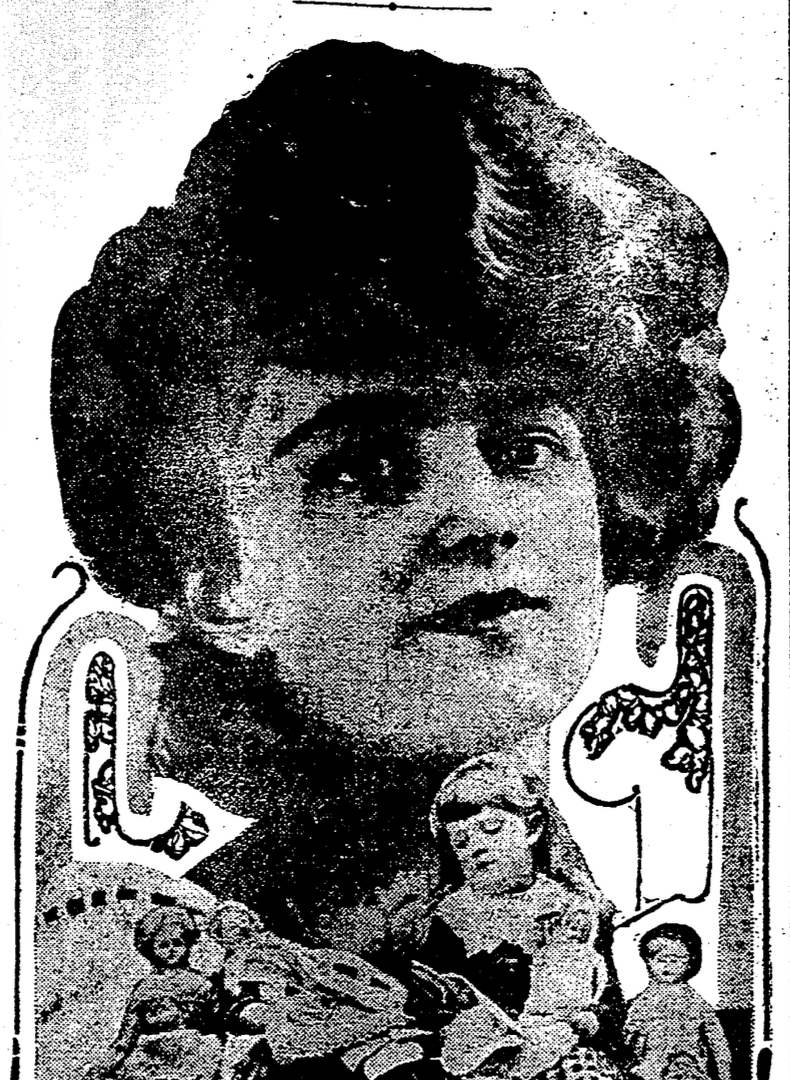
Podcast Episode 24 is about the life of Daisy White and it's an eye opening episode. I found some facts that have never been revealed to the magic community, as far as I can tell. Along the way I found two images of her that are quite amazing. The photo at the top of the page actually has two pictures of her. The larger one shows her at age 25, the smaller one on the right surrounded by dolls is her at age 5.

Here is an amazing photo of Daisy, again as Gertrude Nickerson, in the year 1903. She would have been 22 years old in this photo. It's a much clearer image than the one above. I wish I had found this before I posted the picture on the podcast, but oh well.

It appears much of her music career took place in and around the Boston area. This worked out well for her because her birthmother lived in the Boston area, even though they did not know each other at the time. If you listen to the podcast you can hear how they eventually discovered each other.


Just for some perspective, this photo to the right is a more well known photo of her and possibly one of the last surviving images of Daisy. She was 46 when this photo was taken and she is actually surrounded by a group of magicians and their wives. Frank Ducrot is standing behind her in the larger image. This was during the time that she had been working at Hornmann's Magic Shop and just shortly before all the Bess Houdini/Arthur Ford nonsense.

I felt so fortunate to find the three photos (top, bottom and upper left), that I'm hoping somewhere along the way to uncover more photos of Daisy. My guess is that theatrical magazines of the early 1900s may have better images of her in her 20s when she was working in musical theatre as Gertrude Nickerson.

Then the lower photo is her around 22 years of age. She was into musical theatre and performing under the name Gertrude Nickerson. Listen to the podcast for even more information about the life of Daisy White. There is an article on this blog about Daisy White, but much of that information has changed, and it's all updated in the podcast.

Tuesday, May 28, 2019

The King of Koins & The King of Escape

My most recent podcast (#23) was on T. Nelson Downs. I had never heard much of his life story so I was amazed at what I uncovered. Did you know he was a twin? Sadly, his brother did not survive. Did you know he did other kinds of magic besides coin magic? Did you know he retired at a time when most performers were just making it really big?

His friends called him Tommy. He created a sensation in the entertainment world by doing an act
with only coin manipulation. After consulting with some of the great minds of magic and having them all tell him it was a terrible idea to do 'a coin only act' he decided to do it anyway. He was right and everyone else was wrong. His speciality act soon gave way to other specialty performers. He was known as the King of Koins and In 1899 he was making a huge splash in London with what would become one of the first specialty acts in the nation.

The story if often told that Martin Beck told Houdini to drop the magic, keep the escapes and the trunk trick and he would book him. Well, Houdini's career started to really gain steam after that.
Martin Beck made arrangements for Houdini to go to England in the fall of 1899. However, he didn't actually arrive until Spring 1900. Still, Houdini too was about to take England and all of Europe by storm. These American performers, Downs and Houdini, were about to be the toast of the town in London and beyond!

Here is an amazing fact about Houdini and Downs. They apparently met each other at the Chicago Worlds Fair in 1893. Houdini was working the Fair. I can only assume Downs was visiting as he was employed by the Chicago & Northern Railroad Station. In the July 1901 Mahatma Magazine, this appears, “Travelers returning from Europe report the existence of a powerful mutual admiration society composed entirely of magicians, whose acts are features. The passwords are, “HOUDINI, I’ve seen all kinds of magical acts, but without exception, your is really the acme of perfection.” OR DOWNS, I don’t often praise a man, but whenever I see your act I can’t help thinking that there can never be another act conceived that will be so really marvelous” It is rumored that there are only two members of this society. 

As I mentioned earlier, Downs was already in London when Houdini arrived. But they spent many hours together talking magic. As you've read above they became good friends during this time and socialized often. But as close as they were, when Downs finally left Europe it would be many years before he would see Houdini in person again. This is the unfortunate side of being a traveling performer.


One great story from the life of Tommy Downs takes place in London, while both he and Houdini were appearing. In the November 1930 issue of The Sphinx, T. Nelson Downs relates a story of meeting up with Houdini at their hotel. Downs took from his trunk a ring of 52 keys and said to Houdini, "Here are the tools you do your act with." Houdini replied, "Tom, I don't use keys. You know I did not have the money to buy the keys" etc. Then Downs said, "Well you can't open them with hot air!" (Hilarious!!!)

There is a handwritten quote to Downs from Houdini which reads, "To: T. Nelson Downs, One of the old guards, and one of the Historical Lights of magic. Best Wishes from always the same, HOUDINI, April 1921"

In a Feb 1923 issue of MUM, Downs is sharing a story about what it takes to succeed in magic. He makes a point that a magician is an actor-hundreds of people can do tricks but they cannot all CONVINCE. And he stresses this word CONVINCE. It is the quality that makes one person a true magician/artist in the eyes of the public and another one just a mere trickster. He goes on to point out that people didnt go to see Kellar and Herrmann because of tricks, rather it was their personalities that audiences wanted to see, the tricks were incidental. 

Next he goes on to describe a trip he was making that he had to get up at 6 a.m. with 20 degree weather outside and then would have to travel 75 miles to get to the destination to see this mystifier. He says, "Can anyone imagine me going seventy five miles to see a mere magician do tricks??? NOT ON YOUR LIFE" he says. But he wasn't going to see a mere magician, and he knew that..
When he arrived at the theatre it was sold-out. Thankfully he had his seats down front reserved. Here is what Downs wrote, "After witnessing several interesting acts, the 'star' of the program THE ONE AND ONLY HOUDINI himself made his entrance. It was 21 years since I last saw him at Dusseldorf, Germany"

Now listen closely as Downs gives a very solid description of Houdini in action. "Houdini made a few introductory remarks relative to his performance and retired to prepare for the same. The screen was dropped, a movie shown of Houdini being bound and tied; then the curtain went back up and there was Houdini, bound and tied, as shown in the picture. He made a quick release. Then the screen was lowered again and showed Houdini  in action, actually jumping from one airplane to another, in mid-air (scene was from The Grim Game") then suddenly the machine fell 4500 feet, according to the film, and I nearly fainted it was so realistic. Besides, it was the truth, for you know the camera doesn't lie; remember that! Well, then came the crash; the plane fell to the ground, and our hero saved the girl. After that, I could be made to believe anything, and I am convinced that the balance of the audience  were in about the same mood. Next, Houdini called for a committee to come upon the stage and inspect everything. I was commanded to come up. There were doctors, scientists, and children. His first feat  completely mystified and baffled everyone, including the scientific gentlemen and myself. I was positive in my own mind at the time the manifestations took place ----that I was witnessing a purely spiritualistic phenomena, and that this man Houdini was a genuine spirit medium, but did not wish to acknowledge the fact, possibly for business reasons; for didnt I see him actually swallow several packages of needles, and then swallow several years of thread, drinking a glass of water to aid digestion, and then, didn't I see the thread actually pulled out of the medium's mouth by one of the gentlemen----all perfectly and beautifully threaded? I certainly did! And I wish to emphasize the fact that this was a miracle, if there ever was one. I repeat, that this particular miracle was accomplished on a full-lighted stage, under the strictest of test conditions. Surely, there is no chance for fraud or chicanery here! Here was a real medium, if there ever was one---of this I was thoroughly convinced. 

Then came the water tank escape, bordering on the supernatural; in fact, it was supernatural. Here Houdini was locked upside down in a tank of water, to all appearances it was a physical impossibility to escape or breath under the water. Yet, he did escape, after actually being submerged in water for nearly two minutes, by my watch. The suspense was something fierce! That two minutes seemed like two hours to me, and I almost lost control of myself and come very near to grabbing the ax that was to be used by Houdini's trusty assistants in case of some unforeseen accident. It was not until the next day, after I had returned safely to my native town and to my own domicile, that I awakened to the fact that I had been bulled, bunked, bamboozled, misdirected, and grossly deceived but HIGHLY ENTERTAINED by a clever necromancer---a mere magician." That later part, 'a mere magician' clearly said tongue in cheek. Downs had incredible respect for Houdini and vice versa.

love this description of Houdini's act and Down's reactions to same. This was not the handcuff king (who was great by the way) he remembered in Europe, but rather the very seasoned professional mystifier with thousands of performances under his belt. Downs was clearly impressed!

Frank Ducrot, F.E. Powell, HOUDINI, and Tommy Downs In Houdini's backyard
And a letter sent to Downs on Houdini's stationary from 1926 reads, "They are still talking about your wonderful coin work here. They all agree with me that you are the greatest manipulator of coins that ever lived. Your work with the ten dollar sized coins is simply marvelous and shows your incessant and tireless hours of practice. I am attaching the well known Binet "Pyschology of Prestidigitation" and am quoting your work in my article which is the highest compliment I can pay you. YOU have made The Misers Dream a reality, With Kindest regards and best wishes, Sincerely yours HOUDINI"

In the Ken Silverman book on Houdini it states "Downs like several other magicians had matured on the shady side of the law. According to Houdini, 'he ran a fake magic shop, worked for a fake spiritualist and had been wanted by the federal govt. for a swindle'."  Now, I must say, I have done some pretty extensive research on Downs, and I didn't see anything anywhere that suggested he was a dishonest person. Everyone who spoke of him, spoke very highly of his act and of him as a person. I think he had a mail order magic business, nothing wrong with that. As far as working for  fake spiritualist, I didn't find any info there. Nor did I see anything on a supposed 'swindle.' But its possible Downs was the one who got duped in some deal which was why he was involved. 

Finally there is this short piece which appeared in an old MUM, "Should I live to be a thousand years I'll never forget the wonderful time I had East. Everyone, everywhere, Houdini in particular, seemed to go out of their way to show me a big time and I don't think it will be my last trip. On reflection I can't imagine how I managed to stay away from little old New York for fourteen years." T. Nelson Downs. 

It appears that the two men were very close friends and stayed in touch by corresponding. Houdini as you know died in 1926. Downs, who was older, lived till 1938. Both of them, in their own way, changed the face of magic, forever. Long Live the Kings!


Thursday, May 9, 2019

The Amazing Zancigs First Couple of Telepathy


The Zancigs were probably the first mind reading couple to make a name for themselves internationally. Granted, Robert Heller and Haidee Heller did raise a few eyebrows in their day, but they didn't have the impact of the Zancigs, nor did they tour as much. 


Their Real names were Julius Jorgensen, born in Copenhagen, Denmark March 7th, 1857
His partner was born Agnes Clausen, also in Copenhagen, Denmark in 1849.
Julius moved to the US in 1882 and a short time after he arrived, he met up with Agnes at a social gathering of Danish people who had immigrated to the US. They had known each other in Denmark and here upon meeting, they struck up a new relationship which eventually led to marriage. 

When he was living in Denmark his father had him apprenticed in the iron smelting industry. So when he came to America, this was one of his first jobs. While still employed in the iron plant,  an unusual request came to the young couple to perform at a church function. Because they didnt play any sort of instrument, they decided to try their hand at telepathy. Yeah, that makes sense. I can’t play an insturment, so I’ll read minds instead, lol. I’m going to guess that at some point Julius may have had an interest in this subject or picked up some of the expose pamphlets on how this was done. They began with the work that Robert Heller had done with his Second Site Act and expanded upon it. At any rate, they gave their crude demonstration and were surprised at how well it went over. 

According to Will Goldston’s book, Sensational Tales of Mystery Men, Zancig had an accident at the smelting plant, he badly burned his hand and was out of work for a long while. During his recovery, he decided that he would leave the iron works plant and try his fate in the world of mind reading. 

According to numerous sources, Their career began in 1899, when they start to present their telepathy act at San Souci Amusement Park in Chicago IL. This is even confirmed by a short article about them in a Mahatma Magazine in 1902.  Sensational Tales of Mystery Men, has them at Coney Island and claims that Horace Goldin discovered them there and later introduced them to Oscar Hammerstein.  I have a feeling Coney Island is incorrect, but it’s possible Goldin saw them at San Souci Park. And the Oscar Hammerstein connection is correct. He brought them to NYC to play his Roof Garden at $400 a week. The couple also performed at countless private functions for the high society of NYC. LONG before Steve Cohen took up residency at The Waldorf Astoria, The Zancigs performed there for 12 weeks.

In 1903 they met H.B. Leavitt, a theatrical producer who organized a Globe trotting tour for them.  And indeed they did travel the Globe. Arriving in London at one point they soon became a sensation. 

In 1906, The Zancigs gave a command performance before King Edward VII at Buckingham Palace. After this they toured across England as they had done before and again, the sensation continued. In the book, Illusion Show by David Bamberg, he talks about his family running into the Zancigs on a train in Norway. Agnes asked Okito if the young son, David, was going to follow in his footsteps. Because if he wasn’t she could make a ‘mind reader’ out of him. Remember that anecdote…

Here is a write-up from The Sphinx Magazine in 1906 of their act. “The Mysterious Zancigs were a strong feature of the Orpheum the week of Nov 6th. Their act is certainly a great one in every sense. They work rapidly and accurately in all their tests and are never baffled by any of the attempts made by the audience to fool them. Their exhibition may be termed telepathy, mind-reading, second sight, or by any other name. It goes just the same. Mr. & Mrs. Zancig honored the Sphinx with their presence, and during their call favored us with a private exhibition of their extraordinary powers. While this gifted couple were visiting Mammoth Cave recently, they had one pleasure of giving an entertainment in the bridal chamber of that wonderful cave”

Mammoth Cave is a National Park and Cave in Kentucky. One of the areas is called the Bridal Alter or Bridal Chamber and it was here in 1906 that the Zancigs gave an impromptu performance. 

In a 1906 issue of The Conjurers Monthly magazine, Houdini writes about the Zancigs, “Their act is about the best of it’s kind that we have ever seen, and we have seen almost all!”

In 1907 they were hired to work at the Victoria Roof Garden. They had an extended run that went into 1908 with the amazing salary of $1500 per week, the most ever paid to a mind reading act at the time.  From there they went to the Alhambra for a seven month run, then off to the Wintergarten in Germany.  Then back to America before the year was up.


IN 1910, they were requested to return to England and Buckingham Palace to perform again, this time during the coronation of King George V. They remained in England until 1913, when they finally returned to the US. 

This is just the early part of their career. On The Magic Detective podcast Ep 21, I go over the entire life story of the couple and those performers who joined the show later. Here is the link to episode 21